As an Amazon Associate this site earns from qualifying purchases.
If you're searching for the best compact espresso machine for RV living with low wattage, you need a unit that draws under 1000 watts, fits in a cabinet under 10 inches tall, and won't trip your shore power or drain your battery bank when running off an inverter. The sweet spot for RVs, camper vans, and travel trailers is a manual lever or single-boiler pump machine rated between 600 and 950 watts, with a footprint smaller than 7 inches wide. Anything pulling 1300W or more (typical of household dual-boiler machines) will overwhelm a 30-amp pedestal sharing load with your air conditioner, microwave, or converter.
This 2026 buyers guide walks through wattage math for RV electrical systems, the four espresso machine categories that actually work in mobile living, key features to prioritize (and ignore), and the trade-offs between manual, semi-automatic, and capsule-based brewing. Whether you're full-timing in a Class A motorhome or weekending in a teardrop trailer, the right compact espresso machine for RV living can deliver café-quality shots without rewiring your rig.
When shopping for compact espresso machine for RV living, it pays to compare specs, capacity, and real-world runtime before committing.
Why Wattage Matters More in an RV Than Anywhere Else
In a stick-and-brick home, plugging in a 1500-watt espresso machine is a non-event — your panel handles 200 amps and circuits are dedicated. In an RV, you're typically working with 30-amp service (3,600 watts total) or 50-amp service split across two legs. Subtract the converter charging your house batteries (around 400W), the residential fridge (150-300W), interior lighting, and any USB charging, and you're already at 1,000 watts of baseline draw before brewing anything.
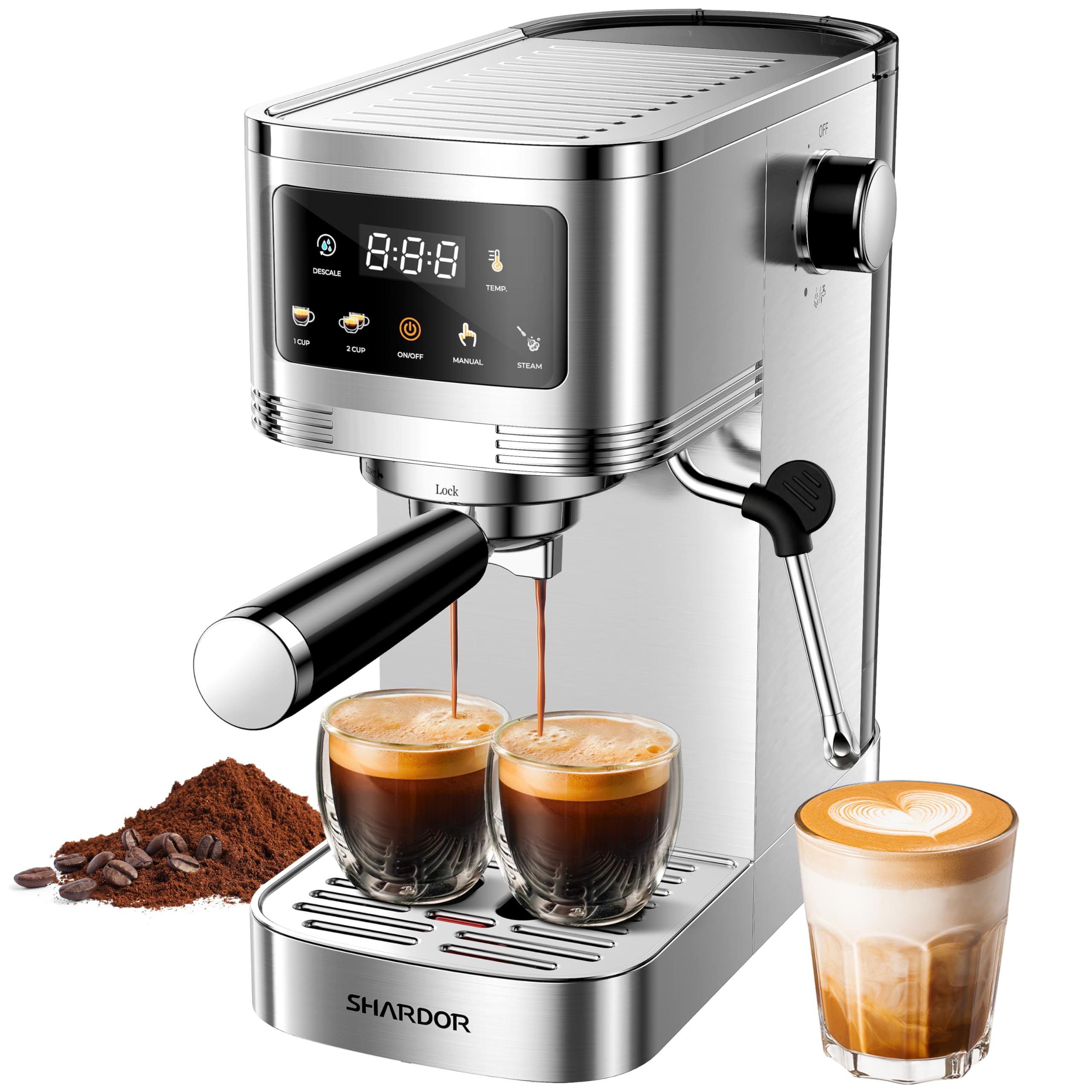
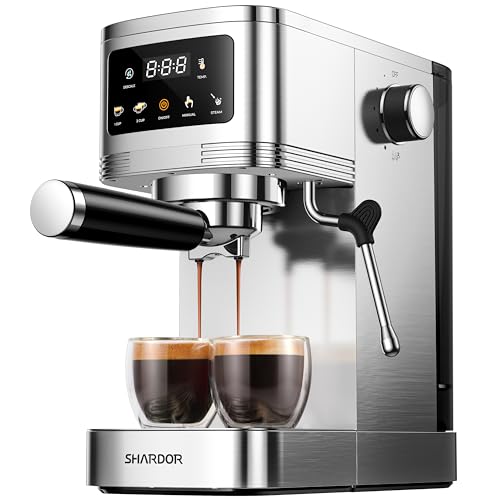
- Professional 20 Bar Pressure System: This semi-automatic espresso maker has a 20-bar pump and a powerful 1350W motor, ensuring rich coffee flavor and aroma. You can make
- One-Touch Touchscreen:LED display with options for single or double cups, manual mode to customize coffee strength, one-touch descaling, temperature control, one-touch steam, and
Comparison: Compact Espresso Machine Categories for RVs
| Category | Typical Wattage | Footprint | Best For | Workflow Time |
|---|---|---|---|---|
| Manual Lever (Flair-style) | 0W (uses kettle) | 5" x 5" base | Boondockers, solar setups | 5-7 minutes |
| Single-Boiler Pump | 800-1050W | 6" x 12" x 11" | 30-amp shore power | 2-3 minutes |
| Nespresso Essenza Mini | 1150W (brief) | 4.3" x 12.8" x 8" | Class B vans, daily speed | 30 seconds |
| Moka Pot + Frother | 0-50W | 3-4" base | Propane stove cookers | 4-5 minutes |
| Dual-Boiler (NOT recommended) | 1450-1700W | Bulky | Avoid in RVs | n/a |
Now add a 15,000 BTU rooftop air conditioner cycling on (1,500-1,800W startup surge, 1,300W running) and a microwave (1,000-1,500W). A high-wattage espresso machine pushing 1,450W during heat-up will trip the pedestal breaker every single time. Boondockers running off lithium banks and 2,000-watt inverters face the same math — the inverter has a continuous limit, and espresso machines have notoriously spiky current draws during their first 90 seconds of heating.
Target specifications for RV use:
- Wattage: 600-1000W ideal; 1100-1200W workable with load management
- Width: Under 7 inches to fit standard RV countertop nooks
- Height: Under 12 inches for cabinet clearance
- Weight: Under 10 pounds for travel-day stowage
- Reservoir: Removable, 20-40 oz (smaller reservoirs reduce sloshing in transit)
- Voltage: 110-120V AC (most RVs); avoid 220V European imports unless you have a step-up transformer
The Four Categories That Work in an RV
1. Manual Lever Espresso Machines (0 Watts)
Lever-pull machines like the Flair Neo or ROK GC require zero electricity. You boil water on your propane stove (or in a 750W travel kettle), pour it into the brew head, and use leverage to push 9 bars of pressure through the grounds. For dry campers and overlanders running solar-only systems, this is the gold standard. Drawbacks: a 4-6 minute workflow per shot, and they require a quality burr grinder (hand grinders work well here and also draw no power).
2. Single-Boiler Pump Machines (700-1050W)
The largest category and the most practical for shore-power RVing. A single thermoblock heater warms water on demand, a 15-bar vibratory pump pushes it through the portafilter. Examples in the under-1000W class include the De'Longhi Stilosa (1100W — borderline), the Casabrews 3700 (1350W — too high), and several Bambino Plus competitors. Look specifically for the spec sheet — many machines advertise as compact but pull 1350W during heating.
3. Capsule Machines (650-1260W)
Nespresso Essenza Mini draws around 1150W during the 25-second heat-up but idles at near-zero. Its tiny 4.3-inch width and 8-inch height make it the most popular factory choice for Class B van conversions. Pod cost adds up for daily drinkers, but the convenience and reliability in a moving vehicle are unmatched. Vertuo machines pull more (1500W) and should be avoided in 30-amp setups.
4. Moka Pot + Milk Frother Combo (0-50W)
Not technically espresso, but a stovetop Bialetti on the propane burner plus a battery-powered handheld frother delivers a respectable cappuccino with effectively no AC draw. For dry-camping coffee enthusiasts, this is the most boondocking-friendly path.
Features That Matter for Mobile Living
Removable Water Reservoir
RV plumbing varies — some rigs have low-flow faucets, others have on-board filtration. A removable reservoir lets you fill from any potable source (jug, gallon bottle, campground spigot) without contorting the machine under your faucet. Look for reservoirs that pop off the back or side, not ones that require lifting the machine.
Stainless Steel Boilers Over Aluminum
RVs experience humidity swings, condensation, and occasional water that's slightly mineralized from campground sources. Stainless boilers resist corrosion; aluminum thermoblocks can pit. Either way, descale monthly with white vinegar or citric acid — RV water is often harder than municipal supply.
Cool-Touch Exterior and Travel-Safe Design
You'll be brewing in a 24-foot tube. A machine with a hot metal housing can scald a hand bumped by a turn while serving. More importantly, internal components must be securely mounted — cheap machines have boilers held by plastic clips that crack after 200 miles of road vibration. Read reviews specifically mentioning durability after travel.
Manual Steam Wand vs. Automatic Frother
Automatic frothers add wattage (often 30-80W extra for the heating element) and bulk. A manual steam wand on a single-boiler machine uses the same heater you're already running. For cappuccinos and lattes, manual wands also give better microfoam.
Power Setup Recommendations
If you're running a pump espresso machine off an inverter, you need at minimum:
- 2000W pure sine wave inverter (modified sine can damage electronic controllers)
- 200Ah lithium battery bank minimum for daily espresso use
- 400W of solar to recover the 80-120Wh per brewing session
On 30-amp shore power, run a soft-start kit on your air conditioner so you can brew espresso without tripping the pedestal. Don't run the microwave and espresso machine simultaneously — even the lowest-wattage espresso machines will trip a breaker when combined.
Maintenance in a Mobile Environment
Pre-travel checklist: empty the reservoir completely, run a blank shot to clear the boiler, secure the portafilter in the locked position (or stow separately), and wrap the steam wand. Water sloshing in a half-full reservoir over 100 miles of interstate will eventually find its way into electronics. For long-term storage in cold climates, run RV antifreeze through the machine or remove it entirely — frozen boilers crack.
For descaling routines, replacement gasket schedules, and what to do when your machine starts pulling sour shots after a long trip, our espresso machine troubleshooting guide covers the most common road-life failures. If you're still deciding between pulling shots and brewing standard coffee, the coffee maker vs espresso machine comparison breaks down which makes more sense for galley kitchens.
Where to Mount Your Espresso Machine in an RV
Standard RV countertops are 22-24 inches deep but often only 14-18 inches wide between the sink and the stovetop. Measure twice. Many full-timers mount their machine on a slide-out shelf in a base cabinet, sliding it forward only when brewing, then stowing it before travel. Velcro strips on the base, paired with a non-slip silicone mat, prevent sliding during boondocking on uneven ground.
If countertop space is genuinely impossible, the manual lever category becomes more attractive — a Flair packs into a 5x5x12 case and can live in a drawer between uses. For tips on consolidating a galley with multiple appliances, see our guide on organizing countertop appliances in small kitchens.
What to Avoid
- Super-automatic bean-to-cup machines — too tall (16+ inches), too heavy (20+ pounds), and they pull 1450W during grinding + brewing simultaneously.
- Commercial-style E61 group head machines — beautiful but draw 1200W constantly to maintain group temperature.
- Dual-boiler machines — designed to make a milk drink while pulling a shot; the wattage demand is incompatible with RV electrical systems.
- European-voltage machines — 220V/50Hz units sold on gray markets won't work on US RV power without a transformer.
- Machines with proprietary cartridge water filters — finding replacements on the road is a nightmare.
Frequently Asked Questions
Can I run a 1200-watt espresso machine on a 2000W inverter?
Technically yes, but with caveats. Most 2000W inverters have a continuous rating of 2000W and a surge rating of 4000W. A 1200W espresso machine will run, but the inrush current when the heating element kicks on can briefly spike to 1800W — fine for a quality pure sine inverter, problematic for cheaper units. Make sure nothing else is running on the inverter when you brew. Lithium banks handle this better than lead-acid because of higher discharge rates.
What is the lowest wattage espresso machine that still pulls real espresso?
Pump-driven machines that reach 9 bars of pressure typically need at least 800W to heat water in a reasonable time. Below that, you're looking at manual lever machines (Flair, ROK) that use external heat sources, or moka pots that produce roughly 1.5-3 bars — café purists don't consider moka true espresso, but the result is rich, concentrated coffee that satisfies most drinkers.
Will a Nespresso work on RV inverter power?
Yes. The Nespresso Essenza Mini draws about 1150W only during the 25-second heat-up phase, then drops to near zero between brews. Most 1500W and larger inverters handle it without issue. The Vertuo line draws closer to 1500W and is riskier on smaller inverter setups.
How much battery capacity do I need to make espresso off-grid?
A single 30-second brew on a 1000W machine consumes about 8-10 watt-hours from your battery (accounting for inverter inefficiency). Two espressos per day for a week of boondocking uses roughly 140Wh — well within a 100Ah lithium bank's capacity. The bigger concern is the surge draw at startup, which requires lithium chemistry or a healthy AGM bank to deliver cleanly.
Is a manual lever espresso machine practical for full-time RV living?
For one or two drinks a day, yes — and the zero-watt operation is a genuine advantage. For households making 4+ drinks daily, the workflow time becomes tedious. Many full-timers compromise with a manual lever for boondocking and a small electric for shore-power campgrounds.
How do I prevent my espresso machine from breaking during travel?
Drain the reservoir and boiler completely before driving, secure the portafilter in the locked position or remove it entirely, place the machine on a non-slip silicone mat in a base cabinet, and don't store anything on top of it that could shift. Vibration is the enemy — soft-mount the machine if you're traveling rough washboard roads regularly.
What size grinder pairs with a compact RV espresso machine?
A hand grinder like the 1Zpresso JX-Pro or Comandante C40 weighs under a pound, draws zero watts, fits in a drawer, and produces espresso-grade grind quality that rivals $500 electric grinders. For electric, look for the Eureka Mignon Notte or DF54 — both under 7 inches wide and around 250W during grinding.
Can I use unfiltered campground water in my espresso machine?
Strongly discouraged. Campground water varies wildly in hardness, and high-mineral water will scale your boiler in weeks rather than years. Use a basic inline filter on your RV's water system, or fill the reservoir from bottled or RO water. Descale monthly regardless — RV machines build scale faster than home machines because the smaller boilers concentrate minerals quickly.
For full transparency on how this site earns from product recommendations, see our affiliate disclosure.
Key Takeaways
- Choosing the right compact espresso machine for RV living means matching the key features to your specific needs and budget
- Read real customer reviews and check the return policy before you commit
- Also covers: low wattage espresso machine RV
- Also covers: small espresso machine for camper
- Also covers: RV friendly espresso maker
- Compare value across models — the priciest option is not always the best fit