As an Amazon Associate this site earns from qualifying purchases.
If you're a baker dealing with chronic wrist pain, choosing the right KitchenAid Artisan mixer for bakers with wrist tendonitis can decide whether you keep baking or shelve your sheet pans for good. The short answer: a 5-quart tilt-head Artisan is usually the smarter ergonomic pick than a heavier bowl-lift Pro, because you load ingredients without hoisting the bowl into position and you never need to crank a side lever. Pair it with a stationary counter spot, a dough hook for kneading, and a few wrist-friendly handling habits, and you can bake regularly without flaring up De Quervain's, tenosynovitis, or general extensor strain.
Why the Artisan tilt-head design is friendlier to sore wrists
Wrist tendonitis flares from three things: repetitive twisting, sustained gripping, and lifting awkward weight at an angle. Stand mixers eliminate most hand-whisking and stirring, which is the headline win. But not every mixer is equally kind to your tendons. The KitchenAid Artisan series uses a tilt-head design: the motor head pivots back so you can drop your bowl straight onto the locking base, attach the beater from underneath, and tilt the head down. You never raise the bowl above counter height, never lock a lever sideways, and never reach across a hot bowl to scrape ingredients.
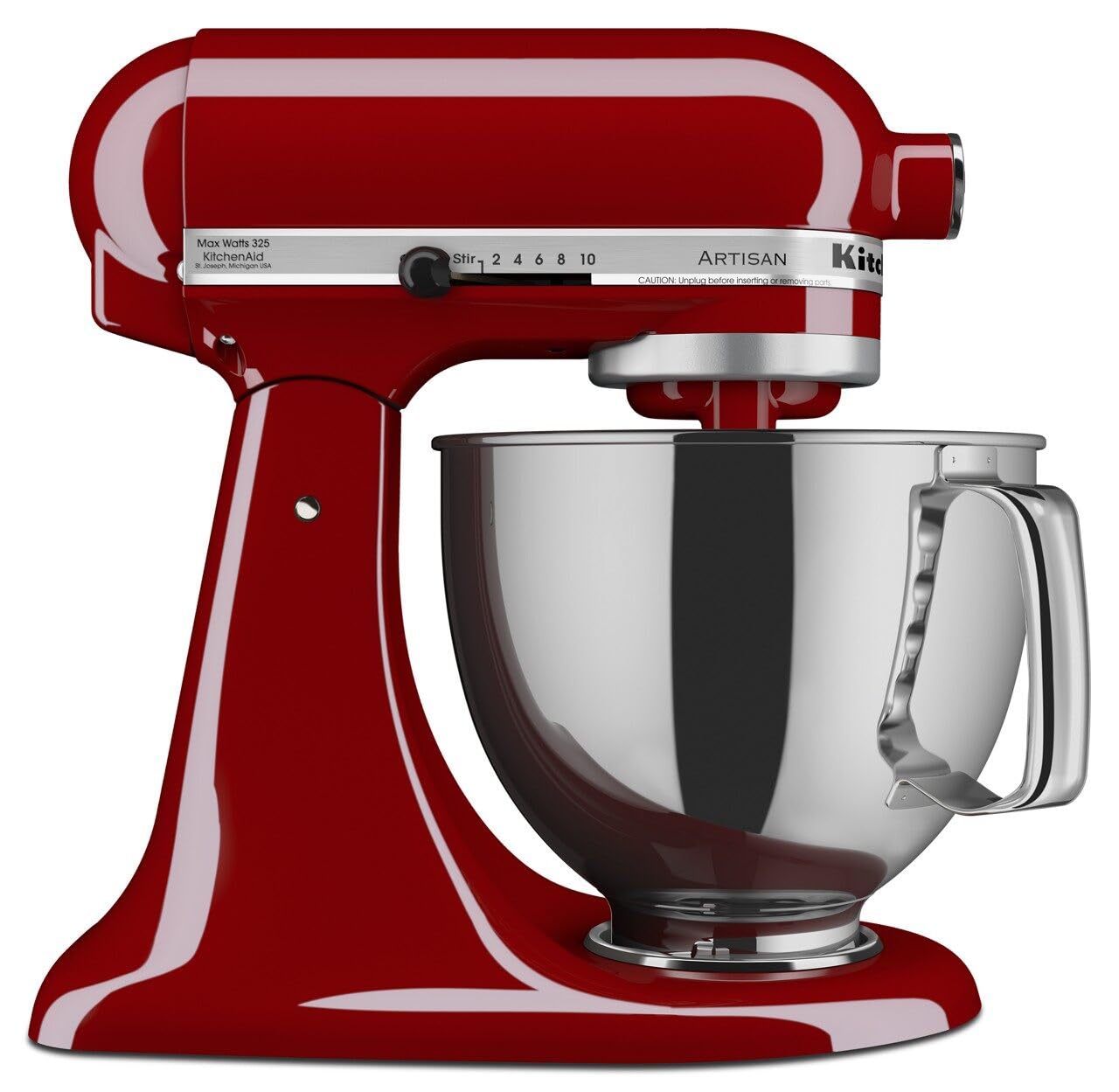
Compare that with bowl-lift models like the Pro 600 or the Commercial 8-quart, which require you to slide the bowl onto two arms, slot it into pins, raise it with a side lever, and lower it again to scrape. The lever motion is a sideways wrist push under load — a classic tendonitis trigger. Bowl-lift mixers also weigh 25 to 32 pounds without a bowl, versus the Artisan's roughly 22 pounds, which matters every time you store or move the unit.
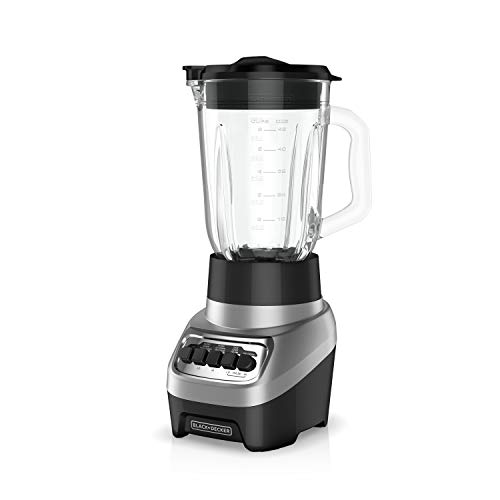
- 4-Tip QuadPro Blade Technology - The 4-tip stainless steel blending blade works with the shape of the jar to create a constant flow and vortex that leads ingredients directly to
- 4 Speeds - From smooth blending to powerful ice crushing, the four speed functions (low, hi, low pulse, hi pulse) can handle any job with ease from creamy smoothies to icy drinks
Tilt-head vs bowl-lift: a quick comparison for tendonitis bakers
| Feature | Artisan (tilt-head) | Pro / Commercial (bowl-lift) |
|---|---|---|
| Mixer weight | ~22 lb | 25–32 lb |
| Bowl loading motion | Drop straight down, lock | Slide onto arms, lift lever |
| Bowl capacity | 5 qt | 6–8 qt |
| Full-bowl weight | 5–8 lb with batter | 10–14 lb with batter |
| Scrape access | Tilt head, fully open | Lower bowl, reach under |
| Wrist verdict | Friendly | Aggravating |
What to look for in a wrist-friendly stand mixer
Tilt-head, not bowl-lift
For tendonitis bakers, a tilt-head is the baseline requirement. The KitchenAid Artisan, Artisan Mini, and Classic are all tilt-head. The Artisan's 5-quart capacity is the sweet spot — large enough for a double batch of cookies or a 4-loaf sandwich-bread dough, small enough that the bowl with batter inside still weighs under 8 pounds, which most flared wrists can handle in short bursts.
Planetary action with a strong dough hook
The Artisan's planetary mixing means the beater rotates as the head spins, so you do almost no scraping between additions. Combined with a spiral dough hook, it kneads stiff bread doughs without you ever touching the dough. If you bake bread weekly, this single feature can prevent years of repetitive-strain damage in the thumb base and forearm.
Pouring shield with chute
The 1-piece pouring shield turns the Artisan into a hands-free flour adder. You dump the flour onto the chute and gravity feeds it in — no spoon, no scoop, no lifting a heavy flour bag at an angle. For a baker who measures by weight (which you should), this is the single best $25 add-on for wrist comfort.
Bowl shape and handle
The Artisan ships with a 5-quart stainless tilt-head bowl with a substantial loop handle. The loop handle lets you carry the bowl with a bent forearm rather than a pronated wrist, which is the position that aggravates extensor tendonitis. Avoid the older handle-less polished bowls if you can — they look pretty but force a thumb-grip carry that is hard on tender tendons.
Speed control you can nudge, not crank
The Artisan's 10-speed slide control moves with a light fingertip push. You don't grip and twist anything. Compare with hand mixers, which require constant trigger pressure — a known tendonitis aggravator over long mixing sessions. If you're shopping the difference, our stand mixer vs hand mixer breakdown walks through which jobs actually demand a stand mixer and which can stay handheld.
Setup that protects your wrists
Counter height and a dedicated spot
The single best change you can make is to stop moving the mixer. A 22-pound appliance lifted from a cabinet onto the counter weekly is a guaranteed flare. Pick a spot at your standard counter height (36 inches in most kitchens) and leave the Artisan there. If you're short on space, a rolling appliance garage at counter height beats a cabinet shelf above your head every time. Our guide to organizing countertop appliances covers a few wrist-friendly layouts.
Bowl handling tricks
Use both hands on the bowl handle, with elbows tucked to your sides. Slide the bowl to the front edge of the counter before lifting so your wrist is straight, not extended. Pre-grease and weigh ingredients into the bowl on the scale, then carry it to the mixer base — don't try to scoop flour into a bowl that's already locked under the head.
Wrist braces during long sessions
A thin neoprene wrist sleeve worn during a 2-hour cookie marathon keeps the tendons warm and discourages the extreme flexion you fall into when scraping. They're $10 to $15 and worth keeping in your apron drawer.
Recipe adjustments that save your wrists
Let the dough hook finish the kneading
Most home bread recipes call for 8 to 12 minutes of machine kneading. Tendonitis bakers should resist the urge to "finish by hand" — the Artisan's dough hook reaches windowpane stage on its own at speed 2. If a dough feels too wet, add flour 1 tablespoon at a time through the chute rather than tipping bowl and dough into a kneading pile.
Use a bench scraper, not your hand
For shaping rolls, baguettes, and pizza dough, a metal bench scraper does the work of a hand and a wrist combined. Push, fold, and divide with the scraper edge. You'll use roughly 70 percent less wrist torque per loaf.
Pre-weigh into deli containers
Set up your mise en place in lightweight 32-ounce deli containers the night before. Pouring from a half-pound deli cup is far easier on the wrist than dipping a measuring cup into a 5-pound flour bag.
Which Artisan model is the best KitchenAid Artisan mixer for bakers with wrist tendonitis
Within the Artisan line, the standard 5-quart Artisan (model KSM150) is the gold standard. The Artisan Mini saves 4 pounds of weight and 20 percent of footprint but tops out at 3.5 quarts, which forces split batches that mean more total mixing time and more bowl handling. For most tendonitis bakers, the trade is a wash — heavier appliance, fewer batches versus lighter appliance, more batches. If you bake bread weekly, take the standard 5-quart. If you bake cookies once a month, the Mini's lighter heft to clean and store wins.
Avoid the Pro line entirely unless a chronic shoulder issue makes the head-tilt motion harder than the lever. Bowl-lift mixers do less per session for less wrist load on the mixer itself, but the bowl is heavier and the lever motion is concentrated. Cross-shopping a Cuisinart? Our Cuisinart vs KitchenAid stand mixer comparison looks at ergonomics, warranty, and head-tilt design across both brands.
Accessories worth buying first
Spiral dough hook upgrade
Older Artisans shipped with a C-shaped dough hook that requires more starting torque. The newer spiral hook (PowerKnead) engages dough more gently and finishes faster. If your Artisan came with the C-hook, the spiral is a $25 swap that reduces motor strain and dough climbing — both of which mean less scraping for you.
Flex Edge beater
The Flex Edge has a silicone scraper along one paddle edge, so the beater scrapes the bowl as it spins. For a tendonitis baker, this single accessory eliminates roughly half of the manual scraping in a typical cookie or cake recipe.
Pouring shield with chute
As mentioned above, this is the highest-yield wrist accessory in the lineup. Buy KitchenAid's 1-piece shield rather than a third-party version — the chute geometry channels flour reliably without backflow.
When a KitchenAid Artisan mixer for bakers with wrist tendonitis is not enough
If you have severe De Quervain's tenosynovitis or post-surgical wrist limitations, even an Artisan may feel heavy during cleaning and storage. Two extra strategies: leave the mixer permanently on the counter under a fabric cover so you never lift it, and buy a second 5-quart bowl so you can swap rather than scrape between batches. A second bowl runs about $30 and turns back-to-back bakes into a one-handed switch. If you also need a small whip volume, a quart-size mixing bowl insert sits inside the main bowl and lets you whip a single egg white without filling the whole 5-quart bowl.
Finally, talk to a hand therapist before any major baking project. A 20-minute eval can identify whether your flare-up pattern is extensor- or flexor-dominant, which changes how you should grip the bowl handle. Many therapists will hand you a custom thumb spica splint that fits under a flour-dusted apron all afternoon.
Frequently Asked Questions
Is the KitchenAid Artisan too heavy for someone with wrist tendonitis?
At about 22 pounds, the Artisan is on the edge of comfortable for active tendonitis. The fix is to never move it. Park the mixer on the counter, plug it in once, and let the bowl, beater, and shield do all the lifting. Daily flares come from cabinet-storage workflows, not from mixer use itself.
Should I get the Artisan Mini if I have wrist pain?
Only if you bake small batches infrequently. The Mini is 16 pounds versus 22, but the 3.5-quart bowl forces you to split most standard recipes, which doubles your handling time. For weekly bakers, the standard 5-quart Artisan reduces total wrist load per recipe even though the mixer itself is heavier.
Can the dough hook fully knead bread without hand-finishing?
Yes. The Artisan's spiral dough hook at speed 2 will reach full windowpane in 8 to 10 minutes on a 70 percent hydration dough. Resist the urge to dump the dough out and knead by hand to "check it" — that defeats the purpose of the machine and is the most common tendonitis trigger for home bakers.
Is a bowl-lift mixer ever better for wrist tendonitis than the Artisan?
Rarely. The bowl-lift lever is a sideways push under load, the bowl-lift bowls are heavier, and the mixer is harder to clean. The only case is a baker with a shoulder issue that makes the tilt-head motion painful — in that situation, a bowl-lift may shift load away from the shoulder at the cost of more wrist strain.
What's the lightest stand mixer that can still knead bread?
If 22 pounds is genuinely too much, the Breville Bakery Boss and the Cuisinart SM-50 sit in the same 22- to 25-pound range — there is no significantly lighter stand mixer that handles bread dough. Below that weight you're in hand-mixer territory, which is worse for tendonitis because of the constant trigger grip.
Should I use a glass or stainless bowl with the Artisan?
Stainless. The Artisan glass bowl is gorgeous but adds about 2 pounds, which makes scraping and carrying noticeably harder on a sore wrist. Save the glass bowl for special occasions when you want to watch the dough hydrate.
How often should I rest my wrists during a long baking session?
Every 30 minutes, set a timer, walk away from the counter, and gently extend your wrists for 60 seconds. Most baking flares come from the cumulative two-hour cookie marathon rather than any single motion. Spreading a long bake across two sessions with a rest in the middle keeps tendons from inflaming.
Key Takeaways
- Choosing the right KitchenAid Artisan mixer for bakers with wrist tendonitis means matching the key features to your specific needs and budget
- Read real customer reviews and check the return policy before you commit
- Also covers: bowl-lift mixer for arthritis
- Also covers: KitchenAid for tendonitis bakers
- Also covers: wrist-friendly stand mixer
- Compare value across models — the priciest option is not always the best fit