As an Amazon Associate this site earns from qualifying purchases.
The best single-serve coffee maker for office cubicle use without plumbing is a compact, water-reservoir-fed pod or capsule brewer that draws under 1500 watts, fits in a 10-inch footprint, and uses a removable tank you can refill at the breakroom sink. Look for models with quiet operation (under 60 dB), a drip tray to catch splashes on a shared desk surface, and pod compatibility that matches what your office stocks. Avoid any machine that needs a direct water line, a 220V outlet, or generates steam vapor that would set off ceiling smoke detectors near workstations.
Cubicle life adds constraints that most coffee maker reviews ignore. You don't have countertop sprawl, you can't hear yourself think over a loud grinder, and walking to the breakroom every two hours defeats the purpose of having your own brewer. A proper desk-side single-serve coffee maker for office cubicle placement solves these by combining a small physical footprint, a self-contained water supply, and one-button operation that doesn't require warm-up rituals or descaling drama mid-Monday-morning standup.
When shopping for single-serve coffee maker for office cubicle, it pays to compare specs, capacity, and real-world runtime before committing.
What "no plumbing" really means for office brewers
Almost every consumer single-serve machine is technically "no plumbing" — they all use a removable water tank. The phrase matters because office buyers often confuse them with commercial pod machines (like the bulk-service units in hotel lobbies) that require a hardwired water line and a dedicated 20-amp circuit. Those are not cubicle-appropriate. What you actually want is a domestic-grade brewer with a tank between 40 and 75 ounces, sized so you refill it once or twice a week rather than daily.
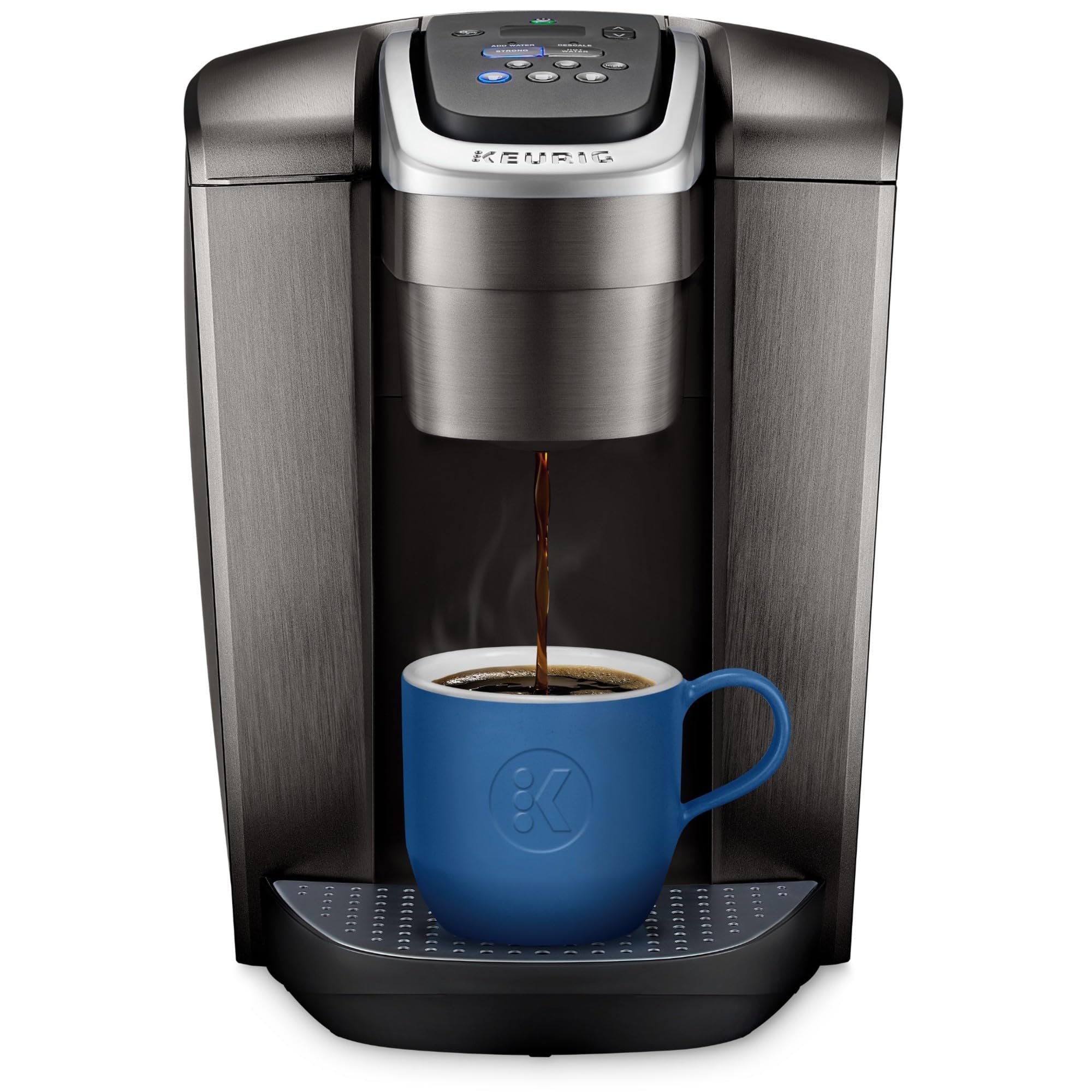
A 40-ounce reservoir gives roughly four to five 8-ounce cups before refill. A 60-to-75-ounce tank stretches that to a full work week for most one-or-two-cup-per-day drinkers. Larger tanks add depth to the machine's footprint, so measure your cubicle shelf or under-monitor space before assuming bigger is better.
- WHAT'S IN THE BOX: One water filter handle, and one filter to help ensure your beverages taste their absolute best
- BREWS MULTIPLE CUP SIZES: 4, 6, 8, 10, 12oz Enjoy the most popular cup sizes
Power draw and your cubicle outlet
This is the single most overlooked factor. Office cubicles often share a circuit across four to six workstations, and that circuit is already loaded with two monitors, a laptop dock, a desk lamp, and a personal heater in winter. A coffee maker that pulls 1500 watts during its 30-second heating cycle can trip the breaker for your entire pod of coworkers — a fast way to make enemies.
Single-serve pod machines typically draw between 1100 and 1500 watts only during the heat-up phase, then drop to near zero. Choose a model on the lower end of that range, plug it directly into a wall outlet (never a power strip with your computer gear), and brew at off-peak times like before the 9 a.m. team standup rather than during it. If your office has a dedicated appliance outlet near the cubicle, use that.
Pod type: K-Cup, Nespresso, or reusable?
Your pod choice has more impact on daily satisfaction than the machine itself. K-Cup style brewers (made by Keurig and many compatible third-party brands) offer the widest variety — hundreds of coffee, tea, hot cocoa, and cider options, with single boxes available at any grocery store. They're forgiving if you forget to order in advance.
Nespresso Original and Vertuo systems make stronger, more espresso-like coffee with better crema, but the pods are more expensive per cup and primarily available by mail order or at specialty retailers. If your office buys pods centrally, ask what system they support before committing — bringing in a Nespresso machine when the company stocks K-Cups means you're buying all your own pods.
Reusable pods (small mesh or plastic baskets you fill with ground coffee) cut per-cup cost dramatically and reduce waste, but they require you to keep ground coffee at your desk and clean the pod after each use. For a cubicle, that's often more mess than it's worth unless you're a daily multi-cup drinker.
Noise levels in an open-plan office
Single-serve machines produce two distinct noises: the pump (a buzzing whir during brewing) and the puncture mechanism (a sharp click when the pod is pierced). Most domestic pod brewers register between 55 and 70 decibels at one meter — roughly the volume of a normal conversation to a loud restaurant. In a quiet cubicle floor, anything above 60 dB will draw attention.
Smaller pod machines tend to be louder because their pumps spin faster to compensate for less internal damping. If quiet matters, look for models that explicitly advertise noise reduction or that reviewers describe as "library quiet." Brewing during natural office noise spikes — when phones are ringing or meetings are letting out — also disguises pump sound.
Footprint and cubicle ergonomics
Measure three dimensions before you buy: width (left-to-right space on your desk surface), depth (front-to-back, accounting for the water tank which often sits at the rear), and clearance height (the lid needs to swing up to insert pods, so don't park it under a shelf). A typical compact single-serve machine measures 9 inches wide by 12 inches deep by 12 inches tall when closed, with another 4 inches of vertical clearance needed for lid operation.
If desk real estate is tight, consider an under-monitor placement or a small rolling cart that tucks beside your chair. Avoid putting the machine on top of papers, electronics, or anywhere a splash from removing the drip tray could damage equipment.
Features worth paying for
A few features genuinely improve cubicle life. An auto-off timer (typically 2-10 minutes after last use) saves power and reduces fire-risk anxiety if you're forgetful. A removable drip tray makes cleaning desk spills trivial. Adjustable cup size (typically 6, 8, 10, and 12-ounce settings) accommodates whatever travel mug or office-supplied cup you use. A strength selector lets you brew a stronger cup without buying different pods.
Features to skip for cubicle use: built-in milk frothers (add footprint and cleaning), built-in grinders (add noise), Wi-Fi connectivity (a solution to a problem nobody has at their desk), and color touchscreens (add cost without adding coffee quality).
Maintenance you can actually do at a desk
Single-serve machines need three regular maintenance tasks: emptying the used-pod bin (every 5-10 brews), rinsing the drip tray (weekly), and descaling with vinegar or a commercial descaler (every 3-6 months depending on water hardness). All three are desk-feasible if you have a small trash bin nearby and access to a sink for rinsing parts.
Descaling is the one task many office users skip, and it's the leading cause of pod machines dying within two years. Set a calendar reminder for every quarter, bring in a small bottle of descaler, and run the cycle on a Friday afternoon when nobody needs coffee. The whole process takes 20-30 minutes mostly unattended.
Office etiquette and shared considerations
Before installing any brewer at your cubicle, check your company's policy. Some employers prohibit personal appliances entirely for fire-code reasons. Others require UL-listed devices only. Many allow them but require they be unplugged at end of day. A quick email to facilities saves an awkward conversation later.
Be considerate of pod waste — most office recycling won't accept K-Cups, so used pods go in landfill trash. Keep your pod bin emptied so it doesn't overflow or smell. And if coworkers ask to borrow a cup, decide your policy in advance (most people charge nothing for the occasional cup but ask regulars to chip in for pods).
Budget guidance
Expect to spend between $80 and $180 for a quality compact single-serve brewer. Below $80, you're getting machines with weak pumps, thin plastic construction, and short warranties — likely to fail within 18 months of daily office use. Above $180, you're paying for milk frothers, larger reservoirs, or branding rather than better coffee.
Per-cup costs run roughly $0.50-$0.80 for K-Cups, $0.70-$1.10 for Nespresso Original, $0.90-$1.40 for Vertuo, and $0.15-$0.30 for reusable pods filled with your own grounds. Multiply by your annual cups (250 workdays times your daily count) to see the real long-term cost — often more than the machine itself.
Where single-serve falls short
Pod brewers struggle to make a genuinely strong cup. Most max out around 10-12 ounces of brewed coffee per pod, and pushing past that dilutes flavor noticeably. If you drink 16-ounce mugs and want real strength, either use two pods (expensive) or accept that the result will be weaker than a French press or pour-over.
They also can't match espresso machines for crema and pressure-extracted shots. The difference matters if you're transitioning from a real cafe habit — for context on that trade-off, see our coffee maker vs espresso machine comparison. For broader brewing options beyond pods, our small kitchen coffee maker guide covers drip and French press alternatives that also work on a desk.
Decision framework
Pick a K-Cup style brewer if: your office stocks pods, you value variety, you drink 1-3 cups a day, and you want grocery-store availability for refills. Pick Nespresso if: you came from a cafe habit, prioritize stronger coffee, and don't mind mail-order pod logistics. Pick a reusable-pod compatible machine if: you're a heavy daily drinker, cost-conscious, and willing to handle the small daily mess of loading grounds.
For deeper specs on what separates good pod machines from mediocre ones — pump pressure, thermoblock vs boiler heating, materials — our full coffee maker buying guide covers the engineering details. And if you're outfitting more than just coffee at your workspace, our tips on how to organize countertop appliances apply equally well to crowded cubicle surfaces.
Frequently Asked Questions
What is the smallest single-serve coffee maker that fits in a cubicle?
The most compact pod brewers measure roughly 5 inches wide, 11 inches deep, and 11 inches tall, with reservoirs around 36-40 ounces. Mini K-Cup style machines and Nespresso Essenza Mini are the standard recommendations for cubicle desks where width is the tightest constraint. Always add 3-4 inches of vertical clearance for the lid to open.
Can I use a single-serve coffee maker at my desk without bothering coworkers?
Yes, with planning. Brew during natural noise spikes (morning arrivals, end of meetings), choose a machine rated under 60 decibels, place it on a foam or silicone mat to absorb vibration, and avoid brewing during quiet focus hours like early morning or late afternoon. Most complaints come from the pump whir, not the brewing itself.
How often do I need to refill the water tank in an office pod coffee maker?
A 40-ounce reservoir lasts about 4-5 standard 8-ounce cups, so a one-cup-a-day drinker refills weekly while a three-cup drinker refills every other day. Larger 60-75 ounce tanks stretch that to a full work week for most users. Keep a small pitcher at your desk to avoid breakroom trips for refills.
Will a coffee maker trip the breaker in a shared office circuit?
It can, especially during the heat-up phase when machines pull 1100-1500 watts for 20-40 seconds. To avoid trips, plug directly into a wall outlet (not a power strip with computer gear), brew when neighbors aren't simultaneously using heaters or microwaves, and choose a lower-wattage model if your office circuit is known to be sensitive.
Are personal coffee makers allowed in most office cubicles?
Policies vary widely. Many companies allow UL-listed personal appliances under 1500 watts with the requirement that they be unplugged at end of day. Some prohibit them entirely due to fire code, insurance, or HVAC concerns. Always check with facilities or your office manager before installing one — written approval protects you if questions arise later.
What is the cheapest way to drink coffee at my office cubicle daily?
A pod brewer with reusable pods filled from a bag of ground coffee runs roughly $0.15-$0.30 per cup versus $0.50-$1.40 for branded pods. Over a year of one cup per workday, the savings exceed $100. The trade-off is cleaning the reusable pod after each brew and keeping ground coffee fresh at your desk.
How do I clean and descale a single-serve coffee maker without a kitchen?
Empty the pod bin and rinse the drip tray weekly using your office sink. For quarterly descaling, bring a small bottle of commercial descaler or white vinegar, fill the reservoir with the descaling solution, and run several brew cycles without a pod into a large cup, dumping each into the sink. Follow with two reservoirs of plain water to rinse. The full process takes 20-30 minutes.
Key Takeaways
- Choosing the right single-serve coffee maker for office cubicle means matching the key features to your specific needs and budget
- Read real customer reviews and check the return policy before you commit
- Also covers: no plumbing coffee maker office
- Also covers: cubicle friendly coffee machine
- Also covers: desk coffee maker single serve
- Compare value across models — the priciest option is not always the best fit