As an Amazon Associate this site earns from qualifying purchases.
Looking for a countertop dishwasher for renters no faucet adapter required? You're in the right place. Many apartments and rental units have modern pull-down sprayers, touchless faucets, or non-standard threading that simply can't accept the quick-connect adapter most countertop dishwashers ship with. The good news: a growing category of tank-fill (also called built-in water reservoir) countertop dishwashers solves this exact problem. You fill the internal tank manually with a pitcher or jug, plug into a standard 120V outlet, and run a wash — no plumbing work, no landlord permission slip, no permanent modifications. This 2026 buyer's guide explains how they work and what to look for.
Why Faucet Adapters Don't Work in Most Rentals
Traditional countertop dishwashers use a quick-connect coupler that screws onto a threaded faucet aerator. That sounds simple until you actually try it in a rental. Three common situations break the assumption:
When shopping for countertop dishwasher for renters no faucet adapter, it pays to compare specs, capacity, and real-world runtime before committing.
- Pull-down and pull-out sprayers. These faucets have no fixed aerator at the bottom — the spray head detaches, and there's nothing to thread onto.
- Touchless and commercial-style faucets. Many landlords now install motion-sensor or industrial-look faucets with sealed, non-removable spray nozzles.
- Non-standard or hidden aerators. European-made and high-end faucets often use proprietary threading (M22, M24, or hidden cache aerators) that the bundled US-standard adapter doesn't fit.
Even when the threading matches, renters frequently can't risk swapping the aerator: damage to the faucet finish or stripped threads can mean losing a security deposit. A tank-fill machine sidesteps the whole problem.
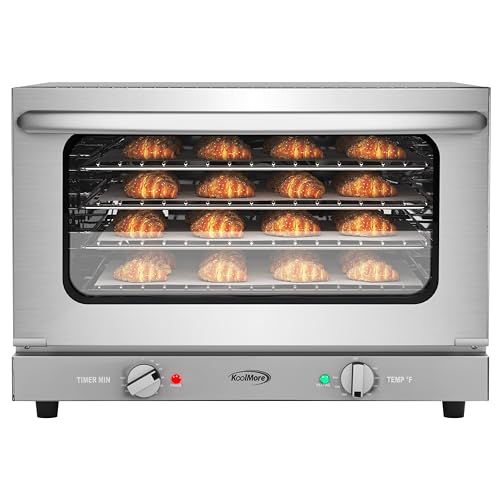
- Commercial Convection Oven – Offering versatility for professional kitchen spaces our convection oven countertop unit supports low-volume baking and medium reheating to support
- Racks for Half-Size Pans – Each commercial convection oven countertop unit features four premium racks that can support half-size baking pans giving you plenty of options for
Comparing Adapter, Tank-Fill, and Hybrid Designs
| Feature | Faucet-adapter only | Tank-fill only | Hybrid (both) |
|---|---|---|---|
| Works with pull-down faucet | No | Yes | Yes (tank mode) |
| Setup time per wash | ~30 sec | 2-3 min (manual fill) | Either |
| Water used per cycle | 3-5 gal | ~1.3 gal | 1.3-5 gal |
| Renter friendliness | Low | High | High |
| Typical price band (2026) | $280-$380 | $330-$450 | $400-$550 |
| Best for | Owned homes, standard faucets | Renters, RVs, dorms | People who move often |
How a Tank-Fill Countertop Dishwasher Works
A tank-fill (sometimes marketed as portable or no-plumbing) countertop dishwasher has an internal water reservoir, usually 5 liters or so. You pour clean water into the top through a fill port using any pitcher, jug, or measuring container. The unit heats and recirculates that water through spray arms exactly like a regular dishwasher. When the cycle ends, you either drain the gray water through a flexible outlet hose into your sink, a bucket, or a bathtub.
For renters, this design has three big advantages over adapter-based machines:
- Faucet-agnostic. You never touch the kitchen faucet, so it works with any sink, including bathroom-only setups.
- Portable between units. When your lease ends, you unplug, drain, and move — no reinstallation hassles.
- Usable beyond the kitchen. Students, RV owners, and tiny-home dwellers run these on a desk, a closet shelf, or a counter near any drain.
What to Look For in a No-Adapter Countertop Dishwasher
Tank capacity and load size
Most tank-fill countertop dishwashers fit 2 to 6 standard place settings. A two-person household can usually clear a day's dishes in one cycle if plates are stacked smartly. Look at interior height too — tall wine glasses or 10-inch dinner plates may not clear lower-profile units. If you cook large meals or entertain, prioritize a 4 to 6 setting model.
Reservoir size and refill behavior
A 5-liter tank is the common standard. Some models reuse water across rinse stages cleverly; others demand a top-up midway through long cycles. Read the spec sheet carefully: a unit that asks for a refill during a 90-minute heavy cycle defeats the purpose if you wanted to walk away.
Drain hose length and routing
You'll need somewhere for the dirty water to go. Most no-adapter countertop dishwashers come with a 3 to 5 foot drain hose. Verify it reaches your sink, bathtub, or floor drain comfortably. A weighted hose tip helps it stay put. If your kitchen layout is awkward, a small accessory bucket plus a transfer pump is a workable Plan B.
Cycle programs
Look for at least four cycles: a heavy or pots-and-pans setting (high temp, longer wash), a normal cycle, an eco or quick wash (under 45 minutes), and a fruit/baby-bottle sanitize cycle if you have specific needs. Some 2026 models also include a glass-only gentle cycle, which is helpful for delicate stemware and meal-prep jars.
Drying method
Heated-air drying is now standard on tank-fill models, but a few entry-level units rely on residual heat. Built-in air vents or auto-open doors at the end of the cycle help dishes finish dry without spotting. If you live in a humid climate, prioritize active drying.
Noise level
Studio apartments live and die by appliance noise. Anything under 55 dB is acceptable for an open-concept space; 48-52 dB is excellent. Check whether the manufacturer measures noise during the wash phase or just standby — reputable brands publish wash-phase numbers.
Power draw
Almost all countertop dishwashers run on standard 120V outlets and pull 700-1200 watts during heated wash and dry. That's important in older rental kitchens where the same circuit also handles a microwave or coffee maker. If you've ever tripped a breaker by toasting and brewing simultaneously, plan to run the dishwasher on a different circuit.
If you anticipate moving to a place with a normal faucet within a year or two, a hybrid model offers flexibility — you can use the tank now and add a faucet connection later. If you're settled into a rental with a non-standard faucet, save money and get a pure tank-fill model.
Installation Tips for Renters
Tank-fill dishwashers technically need zero installation, but a few small choices make daily use smoother:
- Location. Place the unit within hose distance of a sink, bathtub, or floor drain. A rolling utility cart works if counter space is tight.
- Heat venting. Leave 4-6 inches of clearance behind and above the unit. Steam vents during the dry phase — don't park it directly under wood cabinets without a small heat shield.
- Fill pitcher. Keep a dedicated 2-liter pitcher near the dishwasher. Filling from a glass takes forever.
- Drain bucket. If your drain hose can't reach a sink, a 2-gallon bucket catches one cycle's worth easily. Empty it once and you're done.
- Surge protection. A small surge protector behind the unit protects the heating element from voltage spikes common in older buildings.
If you'd like more setup ideas for tight rental kitchens, our guide to organizing countertop appliances covers ways to make a compact dishwasher disappear into your layout.
Detergent and Loading Notes
Use only dishwasher detergent — never regular dish soap, which will foam over and damage the pump. Pods are convenient but can be oversized for compact 5-liter tanks; cutting a tablet in half or using a measured powder works better with these smaller machines. Hard water areas should add a rinse aid to prevent spotting on glass.
For loading: prioritize the bottom rack for heavily soiled items where spray arms hit hardest. Angle bowls toward the center so water reaches their interiors. Avoid blocking the central spray tower with a tall pot — that's the single most common reason a cycle leaves residue.
Once a month, run an empty cycle with a dishwasher cleaner or a cup of white vinegar to descale the heating element. Our full cleaning and maintenance walkthrough covers filter care, gasket cleaning, and tank odor prevention in detail.
When a Countertop Dishwasher Isn't the Right Call
Be honest about your dish volume. If you cook elaborate dinners nightly and rinse a sink full of pots, a 4-place-setting tank fill machine will frustrate you with multiple cycles. In that case, consider an 18-inch portable dishwasher on wheels (which still rolls up to the sink for filling) or simply a better dish drying rack with weekly batch washing.
If your rental sink is a bar sink or has no nearby outlet, a countertop dishwasher may not fit at all. Measure your counter depth (most units need 20-22 inches deep), confirm outlet access, and verify the drain path before you order.
Buying Online and Affiliate Notes
Countertop dishwasher specs evolve quickly, and 2026 brought a wave of newer tank-fill models with auto-dry doors and 45-minute eco cycles. Always check the most recent model number, current Amazon reviews, and return policy before you commit. Our affiliate disclosure explains how we earn commissions when you purchase through our links — it does not affect price or our recommendations.
Frequently Asked Questions
Can I use a countertop dishwasher without connecting to any faucet at all?
Yes. Tank-fill (built-in reservoir) countertop dishwashers are designed to run entirely on water you pour in manually. Fill the tank with 1-2 pitchers of water, close the lid, select a cycle, and the unit handles wash, rinse, and drain on its own. This is exactly what a countertop dishwasher for renters no faucet adapter situation calls for — you never touch the faucet.
How much water does a tank-fill countertop dishwasher actually use per cycle?
Most compact tank-fill models use about 1.0 to 1.5 gallons (4-6 liters) per full cycle, recirculating that water through wash and rinse phases. That's roughly one-third of what a faucet-fed countertop unit uses and far less than hand-washing the same dishes, which typically runs 5-15 gallons.
Will a portable dishwasher work in a rental apartment without permission from the landlord?
A tank-fill countertop dishwasher needs no permanent installation, no plumbing work, and no faucet modification. Most leases allow plug-in countertop appliances without notice, but check your specific lease for clauses about modifying fixtures — a faucet-adapter model could count as one. Tank-fill machines avoid that question entirely.
What do I do if my pull-down kitchen faucet has no aerator threads?
Skip adapter-based machines entirely. Pull-down sprayers usually have an integrated nozzle with no separate aerator, and third-party adapters rarely create a leak-free seal. A tank-fill or hybrid countertop dishwasher is the practical solution. If you really want adapter-style washing, ask the landlord if you can temporarily install a standard faucet at your expense — though most renters find the tank-fill route simpler.
How do I drain a countertop dishwasher if my sink is across the room?
Most models include a 3-5 foot flexible drain hose with a weighted clip. If your sink is farther away, you have three options: route the hose into a 2-gallon bucket and empty it after the cycle, position the unit on a rolling cart that you roll near the sink at cycle end, or use a small inline drain pump accessory rated for gray water.
Are countertop dishwashers loud enough to bother neighbors in a thin-walled apartment?
Quality tank-fill models run at 48-55 dB during the wash phase — about the volume of a quiet conversation. Cheaper units can hit 60+ dB and may annoy roommates or downstairs neighbors at night. Look for the manufacturer's published wash-phase dB rating, not just an idle number, and avoid running cycles after 10 pm in apartments with shared walls.
Can I run a tank-fill countertop dishwasher in a bathroom or laundry room instead of the kitchen?
Yes, and many renters do exactly that when their kitchen has no spare counter. Any outlet that supplies a steady 120V and any drain (bathtub, utility sink, laundry standpipe) works. Just confirm the room is ventilated enough to handle steam from the dry phase and that the floor under the unit is sealed against splashes.
Is it worth buying a hybrid model that supports both tank fill and a faucet adapter?
If you expect to move within a couple of years to a place with a standard faucet, yes — hybrid models cost $50-$100 more but give you both options. If you're settled into a rental with a non-threadable faucet for the foreseeable future, a pure tank-fill model is cheaper and just as capable. Either way, prioritize cycle quality and cleaning performance over connection flexibility.
Key Takeaways
- Choosing the right countertop dishwasher for renters no faucet adapter means matching the key features to your specific needs and budget
- Read real customer reviews and check the return policy before you commit
- Also covers: portable dishwasher rental no hookup
- Also covers: countertop dishwasher tank fill
- Also covers: renter friendly dishwasher no plumbing
- Compare value across models — the priciest option is not always the best fit