As an Amazon Associate this site earns from qualifying purchases.
If your cuisinart food processor leaking from bottom is dripping liquid onto your countertop every time you puree soup or emulsify dressing, the culprit is almost always one of four things: an improperly seated work bowl, a worn or missing rubber gasket on the bottom of the bowl, a cracked bowl shaft, or an over-filled liquid line. The good news is that nearly every cause can be diagnosed in under five minutes at home, and most repairs cost less than $25 in genuine replacement parts. This guide walks you through the exact troubleshooting sequence Cuisinart's own service technicians use, shows you which seals and bowls to replace, and helps you decide when a leak means it is time to upgrade the entire unit.
Why Your Cuisinart Food Processor Is Leaking Liquid from the Bottom
Cuisinart food processors are built around a clever stacked design: the motor base supports a removable work bowl, which sits over a central drive shaft. The bowl itself has a small rubber or silicone gasket pressed into the underside, right where the shaft passes through. When everything is aligned and clean, this gasket forms a watertight seal that lets you process liquids up to the bowl's maximum-fill line. When that seal fails, liquid migrates down the shaft, pools under the bowl, and drips out around the base.
When shopping for cuisinart food processor leaking from bottom, it pays to compare specs, capacity, and real-world runtime before committing.
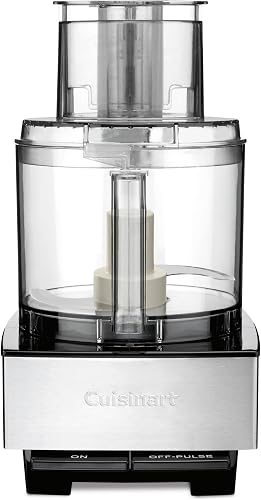
The five most common reasons a cuisinart food processor leaking from bottom occurs are:
- Overfilling above the liquid max line. Every Cuisinart bowl has an embossed "MAX LIQUID" mark roughly one-third below the top rim. Soups, batters, and salsas above this line will leak from the lid and the shaft simultaneously.
- Missing or displaced bottom gasket. The black rubber ring on the underside of the bowl can pop out during dishwashing and end up in your silverware basket.
- Worn or hardened gasket. After two to four years of regular use, the rubber loses elasticity and stops sealing.
- Hairline crack in the bowl or shaft hub. Dropping a frozen bowl on tile or running thick dough can fracture the polycarbonate around the shaft opening.
- Locking tab not fully engaged. If the bowl is rotated just shy of the click position, the gasket compresses unevenly and weeps liquid.
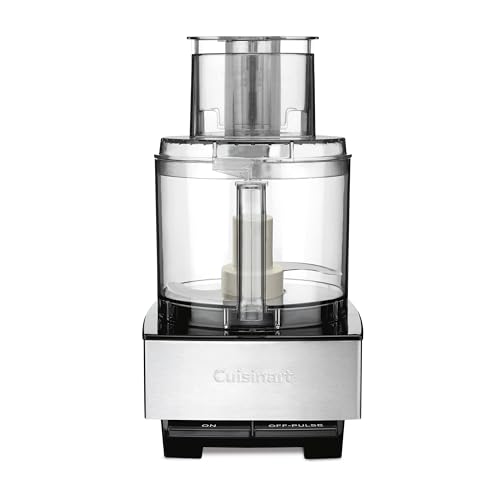
- SUPERIOR FUNCTION: The Cuisinart Food Processor with 720-watt motor functions as a vegetable chopper, blender, and food processer in one. Make any kind of dip, puree soup, or
- MUST-HAVE FEATURES: The 14-cup food chopper has “on” and “off/pulse” buttons with an extra-large feed tube with bowl sleeve assembly designed for both small and large feed tube
Step-by-Step: How to Diagnose the Leak in Five Minutes
Step 1: Empty and dry the bowl completely
Unplug the unit, remove the bowl, dump the contents, and towel-dry the inside, the shaft hole, and the motor base. You cannot diagnose a wet leak — you need a dry baseline.
Step 2: Flip the bowl upside-down and inspect the gasket
Look at the underside of the bowl where the metal or plastic drive coupler protrudes. You should see a black rubber O-ring or flat washer seated in a recessed groove. If it is missing, twisted, flattened, cracked, or coated in dried food, that is your leak. Pop it out with a toothpick and inspect both sides.
Step 3: Run the water test
Reinstall the gasket if present, lock the empty bowl back onto the base (without the blade), and pour two cups of water into the bowl. Wait 60 seconds. If water beads on the motor base or pools beneath the bowl, the gasket has failed or the bowl is cracked. If the water stays inside, your leak was caused by overfilling or improper locking.
Step 4: Inspect for hairline cracks
Hold the empty bowl up to a bright light and slowly rotate it. Look at the area around the central shaft, the handle attachment point, and the bottom corners. A crack as fine as a human hair will leak under pressure even though it looks intact.
Step 5: Confirm the lid is locking correctly
Cuisinart bowls have a safety interlock that must click into a precise position. If you hear the motor run but the bowl rocks slightly, the lid is not seated and the seal is compromised. Rotate firmly until you hear a definitive click.
How to Replace the Bottom Gasket on a Cuisinart Food Processor
If the gasket is the problem, replacement is a 30-second job. Cuisinart sells official gaskets for every model from the DLC-10 through the DFP-14, the Custom 14, the Elite 12, and the newer FP-13D and FP-14DCN series. Order by your model number, which is printed on a silver sticker under the motor base.
- Remove the old gasket by prying it out with a plastic spudger or your fingernail. Avoid metal tools — they can scratch the seating groove.
- Wash the groove with warm soapy water and dry completely.
- Lightly moisten the new gasket with a drop of food-grade silicone grease or plain water.
- Press it evenly into the groove, working around the circumference until it sits flush.
- Run the water test from Step 3 above to confirm the seal.
Never use petroleum jelly, cooking oil, or WD-40 — these degrade the rubber and contaminate food.
When the Bowl Itself Is Cracked: Replacement Options
If your water test reveals a cracked bowl, the part is unfortunately not repairable. Polycarbonate and Tritan plastics cannot be safely glued for food contact, and any patch will fail under the stress of high-speed processing. You have two paths: order an official replacement bowl from Cuisinart's parts division, or upgrade to a newer processor if your unit is more than seven years old and out of warranty.
Replacement bowls for popular models like the DLC-2014, DFP-14, and Custom 14 typically run $40 to $70 and include a fresh gasket. Always verify the model number before ordering — Cuisinart has used at least eight bowl shapes over the years and they are not cross-compatible. For deeper guidance on choosing a new unit, our food processor buying tips page walks through capacity, wattage, and blade compatibility considerations.
Preventing Future Leaks: Best Practices
Respect the liquid max line
The most common cause of leaks is operator error. The MAX LIQUID line exists because centrifugal force pushes liquid up the bowl walls during processing. Two cups of cold soup at rest becomes three cups of climbing liquid at 1,800 RPM.
Hand-wash the gasket area
Dishwashers are hard on rubber. The combination of heat, alkaline detergent, and forced water spray accelerates gasket aging by a factor of three. If you do use the dishwasher, place the bowl on the top rack and pull the gasket out monthly to inspect it.
Cool hot liquids before processing
Pureeing hot soup directly from the stove is the fastest way to warp a bowl and crack the shaft. Let liquids cool to below 150°F, process in batches no larger than half the bowl, and vent the lid feed tube to prevent pressure buildup.
Store the bowl unlocked
Leaving the bowl latched onto the base for months at a time compresses the gasket permanently. Store the bowl loose or upside-down to let the rubber recover.
When to Repair vs. Replace Your Cuisinart
A reasonable rule of thumb: if total repair parts exceed 40% of the cost of a new comparable processor, replace the unit. A $25 gasket on a $200 processor is an obvious yes. A $70 replacement bowl plus a $25 gasket on a 10-year-old DLC-10 nearing the cost of an entry-level new model is a judgment call. If the motor is showing other signs of wear — burning smell, intermittent stalling, blade not engaging — replacement is the smarter move.
If you are weighing whether a food processor is even the right tool for your kitchen anymore, our comparison of a blender vs food processor helps you match the appliance to the recipes you actually cook. For broader kitchen planning, the best food processors of 2026 roundup covers current top picks across price tiers.
Buyers Guide: What to Look For in a Leak-Resistant Food Processor
If you have decided to replace rather than repair, here is what separates a processor that will not leak in three years from one that will.
Sealed-bowl design
Newer Cuisinart models like the Elite Collection and Custom 14 use a SealTight or Easy Lock system with a wider, deeper gasket channel and a higher liquid max line. Look for the words "leak-proof" or "sealed liquid processing" in the product description.
Bowl material
Tritan plastic flexes less than older polycarbonate and resists cracking at the shaft hub. BPA-free Tritan is now standard on Cuisinart units sold after 2020.
Single-shaft drive vs. dual-shaft
Single-shaft designs have one rotating coupling and one gasket, which is mechanically simpler and harder to leak. Dual-shaft designs (used in some Breville and KitchenAid models) offer more flexibility but double the number of seal points.
Bowl capacity
A 14-cup bowl gives you headroom above the liquid line, so the same recipe that overflows a 7-cup bowl sits comfortably in a larger one. If you regularly process soups or batters, size up.
Replacement-part availability
Cuisinart, KitchenAid, and Breville all maintain active parts catalogs going back a decade. Cheaper imports often have no parts pipeline at all — meaning a $20 leak becomes a $150 replacement two years in.
Frequently Asked Questions
Why is my Cuisinart food processor leaking from the bottom when I blend soup?
Soup leaking from the bottom of a Cuisinart bowl is almost always caused by exceeding the MAX LIQUID line embossed on the inside of the bowl. Hot liquids also expand and create vapor pressure that pushes through marginal seals. Cool the soup, process in two batches, and confirm the bottom gasket is seated. If liquid still escapes when you process two cups of cold water, replace the gasket.
How much does it cost to replace the gasket on a Cuisinart food processor?
Official Cuisinart gaskets cost between $8 and $18 depending on model, with most popular models around $12. Generic third-party gaskets can be found for $5 to $7 but fit tolerances are inconsistent — we recommend genuine parts for a reliable seal. A full replacement bowl with gasket included runs $40 to $70.
Is it safe to use a Cuisinart food processor that leaks from the bottom?
No. Liquid leaking onto the motor base can short the internal electronics, trip your GFCI outlet, or in rare cases cause electrical shock. Stop using the unit immediately, unplug it, dry the base thoroughly, and resolve the leak before processing again.
Can I run my Cuisinart food processor without the rubber gasket on the bottom of the bowl?
You can mechanically operate it, but you will leak liquid every time and you risk damaging the drive coupling. The gasket is structural as well as sealing — it cushions the bowl against the motor base and absorbs vibration. Always replace a missing gasket before processing wet ingredients.
Why does my Cuisinart food processor leak only when the blade is spinning?
Centrifugal force during processing pushes liquid up the bowl walls and outward, raising the effective fill level by 30 to 50 percent. A bowl that sits below the max line at rest can climb above it during operation, especially with thin liquids like broth or buttermilk. Reduce batch size and check the lid gasket as well as the bottom gasket.
How long do Cuisinart food processor gaskets typically last?
With hand-washing and moderate use (two to three times per week), expect three to five years. Daily use with dishwasher cleaning typically halves that to 18 months to two years. Inspect the gasket every six months and replace at the first sign of hardening, cracking, or compression set.
Will a leaking Cuisinart food processor be covered under warranty?
Cuisinart full-size food processors carry a three-year limited warranty on the unit and a 10-year warranty on the motor. Gaskets and bowls are considered wear items and are generally not covered after the first year, but cracked bowls due to manufacturing defects often are. Call Cuisinart customer service at 1-800-726-0190 with your model number and date of purchase before paying for parts.
For details on how we evaluate appliance repairs and product recommendations, see our editorial policy and affiliate disclosure.
Key Takeaways
- Choosing the right cuisinart food processor leaking from bottom means matching the key features to your specific needs and budget
- Read real customer reviews and check the return policy before you commit
- Also covers: cuisinart food processor leaks liquid
- Also covers: food processor bowl seal replacement
- Also covers: cuisinart processor stem leak fix
- Compare value across models — the priciest option is not always the best fit