As an Amazon Associate this site earns from qualifying purchases.
If your keurig k-supreme plus not pumping water after a descaling cycle, the most common cause is a trapped air bubble (airlock) in the internal pump line, followed by descaling-solution residue clogging the entrance or exit needle. The fix is almost always free and takes under ten minutes: empty and reseat the reservoir, run two or three water-only rinse cycles, gently slap the side of the brewer to dislodge air, and clear both needles with a paperclip. In this guide we walk through every reason a keurig k-supreme plus not pumping water after descaling, in the exact order a technician would check them, plus when it is finally time to replace the machine and which 2026 alternatives are worth your money.
Why your Keurig K-Supreme Plus stops pumping right after descaling
Descaling forces a concentrated acidic solution through a pump and heating element that normally only see filtered water. Three things tend to go wrong during that process. First, the pump can lose its prime when the reservoir runs dry mid-cycle, which traps air in the line. Second, mineral scale that the descaler loosened can break free in chunks and lodge in the tiny exit needle above the K-Cup holder. Third, leftover descaling solution can foam inside the internal tank, which the pump reads as \"empty\" even when the reservoir is full. All three are user-fixable.
Before you start, unplug the brewer, remove the water reservoir, and dump any remaining liquid. If you smell vinegar or citric acid, you still have descaler inside the machine and that alone can stop the pump from drawing properly. A keurig k-supreme plus not pumping water is almost never a dead motor on a machine less than three years old.
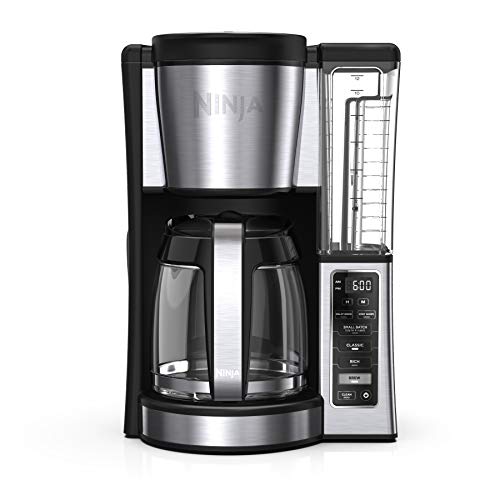
- 2 BREW STYLES: Classic or Rich, each brew is flavorful and never bitter with custom brew strengths
- 12-CUP GLASS CARAFE: Brew small or large batches of coffee – perfect for day to day or entertaining
Step 1: Reset the pump with the reservoir trick
This single procedure resolves the majority of post-descale pump failures on the K-Supreme Plus.
- Remove the reservoir completely and rinse it three times with cold tap water.
- Fill it to the MAX line with fresh, cool (not warm) filtered water.
- Firmly seat the reservoir back onto the brewer, pressing straight down until you feel it click into the magnetic float sensor.
- With the lid open and no K-Cup inside, lift the handle up and down five times. This actuates the entrance and exit needles and helps break any vacuum.
- Close the handle, place a large mug on the drip tray, and select the largest brew size (12 oz).
If water flows, run two more 12 oz cycles back-to-back with fresh water to flush remaining descaler. If the pump still grinds without delivering water, move to Step 2.
Step 2: Burp the airlock
An airlock is the number-one reason a keurig k-supreme plus not pumping water after descaling. The pump is a small vibratory diaphragm pump and cannot push past a large air pocket.
- With the reservoir full, tip the entire brewer forward about 45 degrees over the sink and gently tap the back panel with the heel of your hand 10\u201315 times.
- Set it back down and immediately start a brew cycle. You should hear the pump tone change from a high whine to a deeper, wet sound within 5\u201310 seconds.
- If nothing happens, remove the reservoir, blow firmly into the small round port on the underside of the brewer where the reservoir connects (or use a turkey baster filled with water to push water up into that port). This manually primes the pump.
- Reseat the reservoir and try again.
Step 3: Clear the entrance and exit needles
Calcium chunks loosened during descaling love to lodge in the two needles that pierce the K-Cup. A blocked needle creates back-pressure the pump cannot overcome, and the brewer simply hums.
- Open the handle and locate the exit needle (the one at the bottom of the K-Cup holder) and the entrance needle (the one under the top lid).
- Straighten a paperclip and insert it into each of the three holes on the entrance needle, wiggling it to dislodge debris.
- Remove the K-Cup pod holder by squeezing the sides and pulling up. Rinse it under hot water and clear the exit needle the same way.
- Reassemble and run a water-only cycle.
Step 4: Check the reservoir magnet and float
The K-Supreme Plus uses a magnetic float to confirm there is enough water. If the float is stuck in the \"empty\" position from descaler scum, the brewer will refuse to pump even with a full tank.
Pull the reservoir, look at the small black plastic float on the underside, and make sure it slides freely up and down. Wash it with warm soapy water and a soft brush, never the dishwasher. Reinstall and listen for the satisfying \"clunk\" of the magnet engaging when you set it back on the base.
Step 5: Hard reset the brewer
If you have done all of the above and the pump still will not draw, perform a full electrical reset:
- Unplug the brewer from the wall.
- Remove the reservoir and leave the machine unplugged for 30 minutes. This clears the control board.
- Plug back in, refill with fresh water, and lift/lower the handle three times before brewing.
A hard reset clears any error state the descale cycle may have written to memory. After 2024, Keurig pushed a firmware revision that occasionally locks the pump if the descale cycle is interrupted; the 30-minute power-off clears it.
When the problem is not the pump at all
A surprising number of \"no water\" complaints turn out to be a partially seated K-Cup, a worn silicone gasket around the entrance needle, or hard-water scale that descaling alone cannot remove. If your tap water is above 180 ppm hardness, run a second back-to-back descale with a stronger citric-acid solution, then three full reservoirs of distilled water. For homes on well water, consider switching the brewer to bottled or distilled water permanently, which our team covers in the broader coffee maker buying guide.
How to prevent this from happening again
- Descale every 3 months, not every 6 \u2014 smaller scale chunks are less likely to clog needles.
- Use Keurig-branded descaling solution or a 50/50 white vinegar mix; avoid citric-acid powders that foam aggressively.
- Always run at least three full reservoirs of fresh water after descaling before brewing coffee.
- Replace the charcoal water filter every 2 months.
- Never let the reservoir run completely dry; refill at the \"add water\" prompt, not after.
For wider single-serve and drip recommendations once you have decided whether to repair or replace, see our roundup of the best coffee makers for home brewing in 2026.
When to give up and replace the brewer
If the pump still will not prime after every step above, and the machine is more than four years old, the vibratory pump itself has likely failed. Replacement pumps are not sold by Keurig to consumers, and a service-center repair typically costs 70\u201390 dollars \u2014 more than half the price of a new K-Supreme Plus. In that case, replacement is the smarter call. Below are the three single-serve brewers our editors trust most in 2026 for households moving on from a failed K-Supreme Plus.
Keurig K-Supreme Plus SMART (2026 refresh)
The same form factor you are used to, with a redesigned pump assembly that is far less prone to airlocks after descaling. The SMART version adds BrewID auto-detection and a stronger heating element. If you liked your old brewer's footprint and MultiStream needle, this is the no-friction swap. Check current pricing on Amazon.
Keurig K-Elite (budget-friendly replacement)
A simpler, more reliable brewer with a stronger hot-water dispense feature and an iced setting. It uses a single-stream needle (less clogging) and historically has fewer post-descale pump complaints than the Supreme line. A solid pick if you want something that just works.
Ninja PB051 Pods & Grounds Specialty Single-Serve
If you want to escape K-Cup-only brewing entirely, the Ninja accepts both pods and grounds, has a much larger water reservoir, and uses a different pump design that does not suffer the airlock issue. It is a great cross-shop for anyone who is fed up with Keurig reliability.
Frequently Asked Questions
Why does my Keurig K-Supreme Plus say \"add water\" when the reservoir is full?
The magnetic float on the bottom of the reservoir is either stuck with descaler residue or the reservoir is not fully seated on the base. Remove the tank, rinse the float until it moves freely, and press the tank straight down until you feel the magnet click. If the message persists, the float sensor on the brewer body itself may be coated \u2014 wipe it with a damp microfiber.
How long should I wait between descaling cycles on a K-Supreme Plus?
Every 90 days for households with municipal water, every 45\u201360 days for well or hard water above 180 ppm. The descale light is a timer, not a sensor, so it will turn on whether or not you actually need it; ignoring it for too long is what causes catastrophic pump failures.
Can I use vinegar instead of Keurig descaling solution?
Yes. A 50/50 mix of plain white distilled vinegar and water works well and is what Keurig customer service unofficially recommends when their solution is unavailable. Never use apple cider vinegar, balsamic, or any flavored vinegar \u2014 the sugars will gum up the pump.
Why is my Keurig pump making noise but no water comes out?
That whining sound is the pump running dry against an airlock or a clog. Follow the burping procedure in Step 2 above. If the noise is a deeper grinding rather than a high whine, the pump motor itself may be failing and the brewer likely needs replacement.
Will a paperclip really clean the Keurig needles safely?
Yes \u2014 it is the official method recommended in the Keurig owner's manual. Use a standard-size paperclip, straighten it, and insert it into each needle hole no more than half an inch. Wiggle gently. Do not use toothpicks (they can break off) or sewing needles (too thin to clear clogs).
How much water should I run through after descaling?
At minimum three full 60 oz reservoirs of fresh, filtered water back-to-back with no K-Cup loaded. Anything less and you risk vinegar-flavored coffee for the next week. If you can still smell descaler on the steam from the cup, run a fourth tank.
Is it worth repairing a 4-year-old K-Supreme Plus?
Generally no. Out-of-warranty pump replacement runs 70\u201390 dollars plus shipping, while a brand-new K-Supreme Plus retails around 170 dollars and a K-Elite often goes on sale for under 130. Replacement parts are also not sold direct to consumers, which limits DIY repair. For more on appliance repair-versus-replace economics, see our piece on how to organize and rotate countertop appliances so you can identify which units are due for retirement.
Does Keurig's warranty cover pump failure after descaling?
The standard one-year warranty covers manufacturing defects, including pump failure, but Keurig support will first walk you through the troubleshooting steps in this article. Have your serial number ready (under the reservoir base) and proof of purchase. If you are outside the warranty window but the brewer is less than two years old, call anyway \u2014 they occasionally offer 50 percent discount codes on a replacement unit.
Editorial note: this guide is part of our ongoing countertop coffee equipment coverage. For full disclosure of how we test and recommend products, see our affiliate disclosure.
Key Takeaways
- Choosing the right keurig k-supreme plus not pumping water means matching the key features to your specific needs and budget
- Read real customer reviews and check the return policy before you commit
- Also covers: keurig k supreme water pump fix
- Also covers: keurig not brewing after descale
- Also covers: keurig k supreme plus troubleshooting
- Compare value across models — the priciest option is not always the best fit