As an Amazon Associate this site earns from qualifying purchases.
If you are hunting for the right delonghi dedica espresso machine for tiny house kitchens, the answer is almost always the De'Longhi Dedica line itself, specifically the slim-profile EC685 or its successor the EC885 Arte. At just under 6 inches (15 cm) wide, the Dedica is one of the narrowest pump-driven espresso machines made, which is why tiny-house dwellers, RV converters, van-lifers, and studio-apartment renters keep recommending it. It pulls real 15-bar espresso, steams milk for cappuccinos, fits beside a single-bowl sink, and leaves room for a kettle and a toaster on a 24-inch run of counter.
That answer is the short version. The longer version — which model, which year, which accessories, and what to do when 6 inches of width still feels generous — is what the rest of this guide covers. We will look at footprint math, real-world steam wand limits, water-tank capacity for two-person households, and the workflow tweaks that make a Dedica feel at home on a 30-square-foot kitchen run.
Finding the right delonghi dedica espresso machine for tiny house comes down to matching the features to how you will actually use it.
Why Width is the Wrong-Sized Problem in a Tiny House
Most espresso machine reviews talk about height or weight. In a tiny house, neither matters as much as width along the front edge of the counter. The Dedica's 5.9-inch (149 mm) footprint is the spec that earns its reputation, but the depth and height also matter once you start opening overhead cabinets.
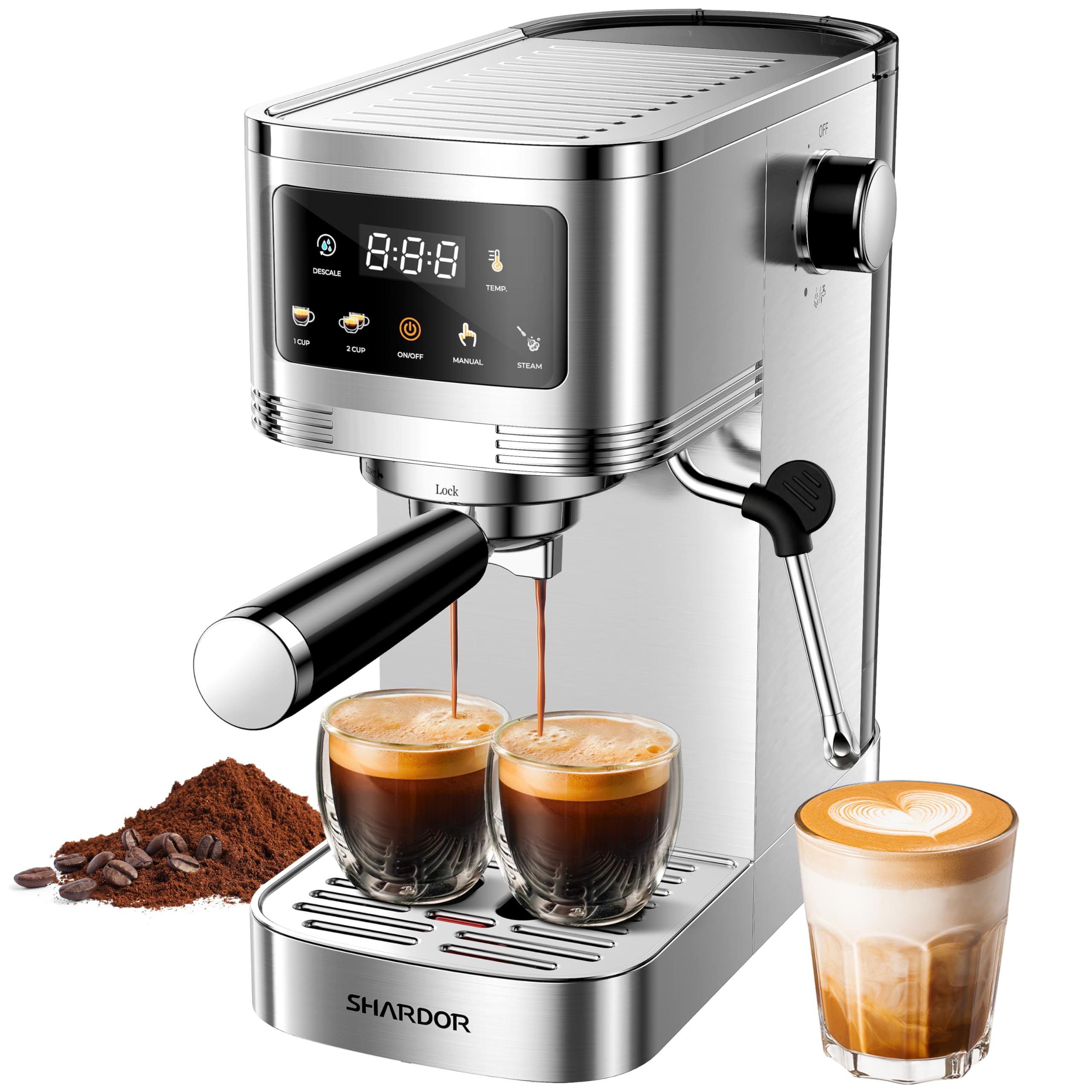
- Professional 20 Bar Pressure System: This semi-automatic espresso maker has a 20-bar pump and a powerful 1350W motor, ensuring rich coffee flavor and aroma. You can make
- One-Touch Touchscreen:LED display with options for single or double cups, manual mode to customize coffee strength, one-touch descaling, temperature control, one-touch steam, and
Real-World Tiny House Counter Math
A typical tiny-house kitchen run is 4 to 6 linear feet of counter, often broken up by a sink and a two-burner cooktop. A common layout gives you a single working zone of about 18 to 24 inches between the sink and the stove. Here is how the Dedica fits into that zone:
| Counter Zone | Width Used | Width Remaining (24-in zone) |
|---|---|---|
| Dedica EC685 only | 5.9 in | 18.1 in |
| Dedica + small burr grinder (Baratza Encore) | 11.4 in | 12.6 in |
| Dedica Maestro Plus (built-in grinder) | 5.9 in | 18.1 in |
| Dedica + electric kettle + grinder | ~16 in | 8 in |
| Dedica + knock box + tamping mat | ~13 in | 11 in |
- Width: 5.9 in / 149 mm — narrower than a standard cereal box.
- Depth: 13 in / 330 mm — fits on a standard 14-inch tiny-house counter with room to wipe down.
- Height: 12.9 in / 328 mm — clears most under-cabinet runs that sit 15 to 18 inches above the deck.
- Weight: ~9 lb / 4.1 kg — light enough to stow in a cabinet between uses if you are truly counter-starved.
Compare that to a typical prosumer machine like a Rancilio Silvia (9.2 inches wide, 30+ pounds) or even a Breville Bambino (6.3 inches wide, but 13+ pounds and taller). The Dedica gives up some thermal mass and steam power, but in return you keep a usable counter.
Which Dedica Model Belongs in a Tiny House
De'Longhi has shipped several Dedica variants. They share the same chassis dimensions, so footprint is essentially identical across the line — the differences are features, milk system, and current availability.
Dedica Style EC685
The original slim Dedica. Manual steam wand (panarello-style frother by default), single boiler with thermoblock heating, pre-set single and double shot buttons, and a programmable third button. It heats up in about 40 seconds, which matters in a tiny house because you are not leaving an idle machine warming up all morning and bleeding heat into your sleeping loft. The EC685 is the one most tiny-house owners settle on because it is the cheapest, the easiest to find replacement parts for, and the easiest to repair when the solenoid eventually clogs.
Dedica Arte EC885
The 2022-forward refresh of the EC685. Same 5.9-inch width, slightly updated control panel with a manual milk-steaming mode that lets you do real microfoam latte art instead of just the airy froth the panarello gives you. If you are tiny-house living and you take your milk drinks seriously, the Arte is worth the upgrade. If you drink mostly straight espresso or Americanos, the EC685 saves you money you can spend on better beans.
Dedica Maestro Plus EC9155MB
The premium Dedica with a built-in conical burr grinder. Same narrow chassis, but the integrated grinder makes it a true bean-to-cup setup in one footprint. For a tiny house this is genuinely compelling — one appliance instead of two means no separate grinder eating another 5 inches of counter. The trade-off is price (roughly 2.5x the EC685) and a more complex machine to service if something breaks.
The takeaway: if you only own a Dedica EC685 and a small grinder, you can still keep a cutting board out for breakfast prep. Once you add a third appliance, you start trading the espresso bar against meal-prep space, which is when the Maestro Plus starts to make sense even at its higher price.
Power Draw: The Other Hidden Tiny House Constraint
Tiny houses are often on shore power, 30-amp RV pedestals, or solar with a 2,000–3,000-watt inverter. The Dedica draws 1,300 watts during heat-up and brewing, which is well within reach of a 15-amp circuit but worth checking against your inverter's surge rating. A toaster oven plus a Dedica plus a microwave on the same circuit will absolutely trip a breaker, so plan your morning sequence: heat the Dedica first, pull shots, then run the toaster.
If you are running off-grid most of the time, look at our notes on the best compact espresso machine for RV living with low wattage — some of the same logic applies to solar-powered tiny houses, and there are even lower-draw alternatives worth knowing about before you commit to the Dedica.
The Tiny House Coffee Bar Workflow
The delonghi dedica espresso machine for tiny house use only works if your workflow respects the space. Here is the routine most tiny-house owners settle into after a few weeks:
- Pre-stage the night before. Fill the 35-oz water tank, dump and rinse the drip tray, and leave the portafilter loose so it dries fully.
- Heat-up doubles as wake-up. Push the power button on your way to the bathroom. 40 seconds later it is ready.
- Grind into the basket on a folded towel. Tiny-house counters are usually butcher block or laminate that hates moisture and coffee oils — the towel saves the finish and catches grounds.
- Tamp on the rim of the drip tray. Skip the tamping mat entirely. The Dedica's drip tray is tall enough to use as a working surface.
- Steam directly into the cup. If you are using the EC685's panarello, steam your milk in the same ceramic cup you will drink from. One less dish.
- Backflush weekly, descale monthly. Tiny-house water is often from a tank or a hookup of unknown mineral content, which means scale builds faster than in a typical apartment.
If you want a deeper comparison of the espresso lifestyle vs. drip in small kitchens, our piece on coffee maker vs espresso machine walks through the trade-offs around cleanup time, bean cost, and counter footprint.
What the Dedica Does Not Do Well
Honest review territory. The Dedica is not a perfect machine, and tiny-house living amplifies some of its weaknesses.
- Steam pressure is modest. The single thermoblock cannot match a dual-boiler machine for milk texturing. If you want true latte-art microfoam every time, the Arte is closer but still not a Breville Bambino Plus.
- The pressurized baskets are forgiving but limiting. The stock baskets use a pressurized insert that makes any grind work, but you cap out on espresso quality. Swap to non-pressurized IMS or naked baskets once you dial in your grinder.
- The water tank is small. 35 oz / 1 liter sounds fine, but two cappuccinos and a flat white can drain it. Refilling is easy because the tank pulls out the back — but in a galley layout where the Dedica is wedged against a wall, you may need to slide the machine forward to access it.
- The drip tray fills fast. Every shot dumps purge water. Empty it daily or you will have espresso under your toaster.
Most of these are solvable with workflow, not with a different machine. The single non-negotiable problem the Dedica solves — width — is the one that matters in a tiny house.
Accessories Worth the Counter Space
The shortlist of accessories that actually earn their footprint in a tiny-house coffee bar:
- Bottomless (naked) portafilter for the Dedica. Same width, dramatically better extraction visibility, and the only realistic path to good espresso from this machine.
- Wall-mounted knock box. Screw a small Bezzera-style knock drawer to the cabinet face under the counter. Zero counter footprint, easy to dump grounds into your compost.
- 54mm tamper that doubles as the OEM plastic one. Or replace with a calibrated tamper that nests inside a coffee mug when stored.
- Digital scale that hides under the drip tray. A simple $20 pocket scale is enough and stows vertically in a drawer.
For broader storage ideas across all your kitchen gear, our guide on how to organize countertop appliances covers vertical storage, cabinet appliance garages, and rotation systems that pair well with the Dedica setup.
Care, Cleaning, and Tiny House Water
The single biggest reason Dedica machines die early is scale. In a tiny house, you are often on well water, RV-park water, or a tank — all of which can be harder than municipal tap water. Three habits extend the life of the machine significantly:
- Use filtered water in the tank. A simple pitcher filter is enough. Distilled water is too soft and can cause heating element issues — aim for moderate hardness.
- Descale every 4–6 weeks, not when the light tells you. The descale light on the Dedica is timer-based, not sensor-based. In hard-water tiny houses, descale on a calendar.
- Run a blank shot before the first pull of the day. Clears any stagnant water and warms the group head.
When something does go wrong — usually low pressure, a stuck pump, or no steam — start with our espresso machine troubleshooting guide before assuming the machine is dead. Most Dedica failures are descaling issues or worn portafilter gaskets, both of which are cheap home fixes.
Frequently Asked Questions
Will the De'Longhi Dedica fit under a tiny house upper cabinet?
The Dedica stands 12.9 inches tall with the cup tray flipped down. Most tiny-house upper cabinets are mounted 15 to 18 inches above the counter, so yes — the machine clears with room to fill the water tank from the back. If your uppers are tighter than 14 inches, measure twice. You can also use the Dedica with the cup tray flipped up for taller mugs, which adds another 2 inches of clearance need.
Is the Dedica EC685 or EC885 Arte better for a tiny house?
Both have the same 5.9-inch footprint, so the choice is about features, not space. The EC685 is the budget winner and the easier machine to repair years down the road. The EC885 Arte adds a manual steam mode that produces real microfoam, which matters if you drink lattes and cappuccinos daily. If you are mostly an espresso or Americano drinker, save the money and get the EC685.
Can I run a De'Longhi Dedica off a 2000-watt inverter in a tiny house?
Yes, but only as the dominant load on the inverter at that moment. The Dedica draws 1,300 watts during heat-up and pulls. A 2,000-watt pure sine wave inverter handles it comfortably with margin for a small fridge cycling, but not while a microwave or induction burner is running. If you are fully solar, schedule espresso for mid-morning when batteries are topping off.
How long does a De'Longhi Dedica last with daily tiny house use?
With filtered water and monthly descaling, owners report 5 to 8 years of daily use before a major repair. The most common failure points are the brew solenoid (a $30 part) and the portafilter gasket (a $5 part). The thermoblock itself rarely fails. The Dedica is repairable enough that several tiny-house communities pass them down secondhand.
Do I need a separate grinder for the Dedica in a tiny house?
If you buy the EC685 or EC885 Arte, yes — and a hand grinder like a 1Zpresso JX-Pro takes essentially zero counter space and lives in a drawer. If you buy the Maestro Plus EC9155MB, the grinder is built in and you save the second footprint entirely. The Maestro Plus is the cleanest tiny-house solution if the budget allows.
Can I use pods or capsules in the De'Longhi Dedica?
The standard Dedica is a 51mm portafilter machine that does not accept Nespresso or ESE pods natively. There is a separate ESE-pod adapter basket sold by De'Longhi that drops into the portafilter, which works fine for travel days or when you do not want to grind. If pod compatibility is essential, the De'Longhi EC260 is another narrow option, though it pulls weaker shots than the Dedica.
How loud is the De'Longhi Dedica in a small space?
The vibratory pump is the loudest component, running around 70 dB during a shot — comparable to a kitchen exhaust fan. In a tiny house with thin walls and a sleeping loft, this is noticeable but brief (25 seconds per double shot). The bigger noise concern is the grinder, not the machine. Choosing a quieter electric grinder or a hand grinder solves the early-morning espresso-without-waking-your-partner problem.
The Bottom Line
For a tiny house, RV galley, studio kitchenette, or any space where counter inches are currency, the Dedica line is genuinely the right answer — not as a compromise, but as the machine that happens to be built for exactly your constraint. The EC685 is the safe, repairable default. The EC885 Arte earns its premium if you drink milk drinks. The Maestro Plus EC9155MB is the all-in-one play when grinder footprint is the next problem after machine footprint. In all three cases, the delonghi dedica espresso machine for tiny house living delivers the rare thing tiny-house gear is supposed to deliver: full capability inside a footprint that respects the rest of your life.
Key Takeaways
- Choosing the right delonghi dedica espresso machine for tiny house means matching the key features to your specific needs and budget
- Read real customer reviews and check the return policy before you commit
- Also covers: narrowest espresso machine delonghi dedica
- Also covers: tiny house espresso machine compact
- Also covers: delonghi dedica slim counter espresso
- Compare value across models — the priciest option is not always the best fit